Notes/The rooms
(Rest)
Sleep
The room that holds how you actually rested
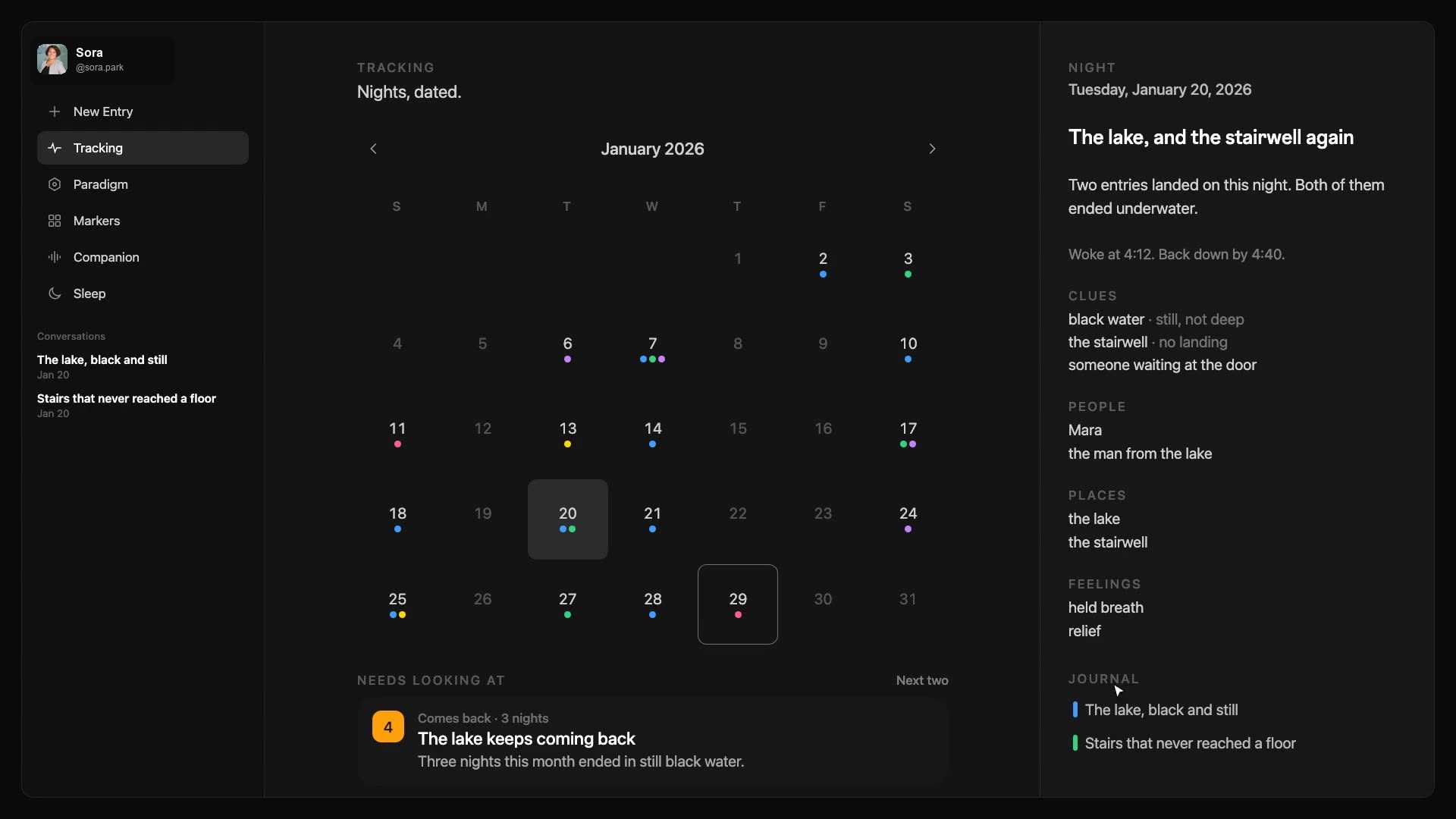
Sleep is the room that holds how you actually rested. Not a lecture about hours. Not a score of how good you are at sleeping. You come here to put last night on a date — when you lay down, when you sat up, how the rest felt in your body — and to keep that next to the nights you wrote. Rest and the dream live in the same house. They do not have to explain each other. They only have to share a morning.
Logging Last Night
The first time the room is empty, it asks you to log last night. You can. You can also say not now. Nothing else in the house waits on this. When you do log, you set a bedtime and a wake on a clock, then you say how it was: how rested you felt, the mood you woke with, the energy you had, whether falling asleep was instant or took a while or took hours, whether you woke in the night.
You can go further if the night still has a shape. How much you remember — none, fragments, vivid. What it felt like — peaceful, mixed, unsettling, a nightmare. Whether you knew you were dreaming. Whether the rest felt restorative. A short line for what you saw, if a line is still there. Save writes it to that date.
Dated Against What You Wrote
The date on a sleep log is the same kind of date a journal uses: the night, not the afternoon you found time. If you wrote a hallway at 7am and logged the rest at noon, they still belong to the same morning. You do not have to link them by hand. The date is the link.
You can write and never log sleep. You can log sleep and never write. Both rooms stay honest. When they land on the same date, you remember the short night and the person who was in it without deciding which memory is the real one.
How It Felt
Duration is how long you said you were down. The clock is the bedtime and the wake you chose. Rested, mood, and energy are how the morning landed in you, not a grade from the house. What the room draws from those answers comes from how the night felt — not a watch, not a clinic. If a figure appears, it is a reading of what you already told the room. It is not a verdict on whether you are good at this.
Do not chase a better number. Chase the morning you actually had. A long night that left you raw is still worth keeping. A short night that left you clear is still worth keeping. If you want to talk about the rest, tell Nalani. She will sit with a short night the same way she sits with a hallway.
Looking Across Days
Once a few mornings are in, you can look at a day, a week, a month, or a longer stretch. Duration sits large. Under it: the schedule you have been keeping, how the nights felt, how often you remembered anything. History is the same nights as a list — a date, how long, the clock, the tone, a scrap of what you saw if you left one.
Open a morning and you are looking at that day. The room does not turn the stretch into a contest. A run of short nights next to vivid recall is information, not a diagnosis. You can leave it as information. You can take one morning into Chat and stay with it. You do not have to do either.
Rest and the Night
Some mornings the dream is the whole story and the rest was ordinary. Some mornings there was no dream you can name, only the body, and that is why you opened Sleep. Both belong here. Sleep keeps the hour. The journal keeps the image. Nalani will not make you pick a lane.
If the night is heavy, she stays present, and she is still not a therapist. In the United States, 988 is a real person. Where you are, a local crisis line is a real person. The room will hold the clock you set and the feeling you named, dated against the nights you wrote — rest and dream, same house, no score for being good at either.