The Connection Between Lack of Sleep and Work Productivity
Wellness
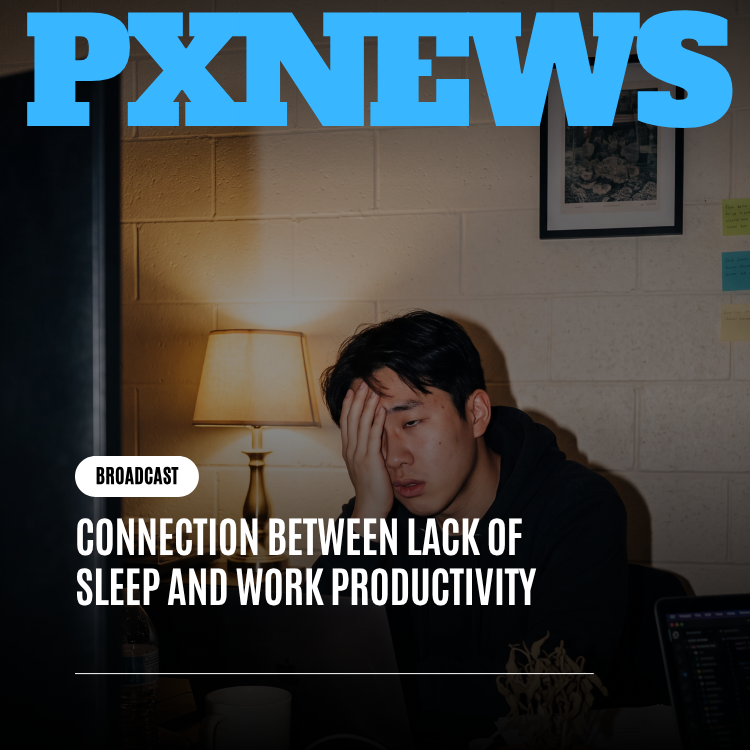
You know the morning. The alarm goes off after a night that felt more like static than rest. Maybe you were up twice with a spinning to-do list. Maybe you slept eight hours but woke from a dream so strange and specific it followed you into the shower. Either way, you sit down at your desk already running a deficit, and the day makes you pay it back with interest. Sleep scientists have spent decades studying why this happens, and the short version is not complicated: your brain does real work while you are unconscious, and when that work gets interrupted, it does not just vanish. It shows up later, at your desk, in the meeting, in the inbox you cannot seem to clear.
What a Short Night Actually Costs You
Lost sleep is not a vague, moody inconvenience. It has specific, measurable effects on the parts of your brain you rely on most at work. Research consistently shows that inadequate sleep impairs attention, working memory, and the prefrontal cortex functions behind planning and judgment. That is the region that helps you weigh trade-offs, resist a bad shortcut, or hold a complex problem in mind long enough to solve it. When it is under-rested, everything gets a little blurrier. You reread the same paragraph three times. You forget why you walked into the meeting. You say yes to a deadline you will regret by Thursday.
Emotional regulation takes a hit too. Sleep scientists broadly agree that the amygdala, the brain's alarm system, becomes more reactive after a poor night, while the prefrontal cortex that normally keeps it in check is less able to do its job. In practice, that means small workplace frictions land bigger than they should. A blunt email reads as an attack. A minor setback feels like a crisis. You are not imagining it, and you are not simply being sensitive. Your brain's regulation system is running on less fuel than it needs.
Then there is memory consolidation, the process by which the brain sorts and files what happened during the day, particularly during REM sleep and dreaming. This is part of why a rough night can leave you not just tired but foggy on details you would normally recall without effort. The night is not just downtime between workdays. It is part of how the workday gets processed in the first place.
A bad night at work often starts the evening before, with a mind that never got the chance to put itself down. Our goal with in.between is not to fix your sleep schedule. It is to give the noise somewhere to go, so you are not carrying all of it into your 9am.
The in.between Team
It Is Not Only About Hours
Plenty of people log a full eight hours and still feel wrecked. That is because sleep quality and mental load matter as much as sleep quantity. A racing mind at 1am, replaying a conversation from work or rehearsing tomorrow's presentation, delays the onset of restorative sleep even if you are technically in bed for long enough. And a vivid, unsettled dream, even one you cannot fully explain, can leave a residue of unease that outlasts the dream itself. You wake up carrying a mood you cannot quite trace to anything real, and it colors the first few hours of your day before you even notice it is there.
This is the piece that gets left out of most sleep-and-productivity advice, which tends to focus entirely on hygiene: screens off, room cooler, consistent bedtime. Those habits matter. But they do not address what is actually happening inside your head once the lights are off. A mind that is still processing an argument, a worry, or a dream it has not made sense of yet does not quiet down just because the room is dark and the phone is in another room.
Getting the Noise Out Before It Costs You the Day
This is where journaling earns its place, not as a wellness trend but as a practical release valve. Writing something down, in plain language, before you try to sleep or right after you wake, gives a racing thought or an unresolved dream somewhere to land besides the inside of your skull. It does not erase the thought. It relocates it, out of the loop and onto the page, which for most people is enough to loosen its grip.
in.between is built around this idea, with Nalani as the companion who makes it easier to actually do. Instead of staring at a blank page trying to figure out where to start, you talk to her the way you would talk to someone who is genuinely curious and in no hurry. She asks one question at a time. She does not rush you toward a lesson or a moral. Some nights that conversation is about a dream. Other nights, through Companion Mode, it is simply about whatever is keeping you up at 2am, dream or not.
- Chat: a place to talk through a dream, a worry, or the residue of a strange night, in your own words, at your own pace.
- Imagine: turn a dream into an image, which can help externalize it rather than leaving it looping in your head.
- Brainstorm: a spoken, voice-based way to talk it out when typing feels like one more task on the list.
- Companion Mode: for the nights when sleep will not come and the dream is not even the point, just a mind that will not slow down.
- Markers and Index: a way to notice what keeps recurring in your dreams and thoughts over time, rather than losing each night's insight the next morning.
None of this claims to make you more productive in some measurable, dashboard-ready way. That is not the promise, and it should not be. What a few minutes with Nalani can do is smaller and more honest: it gives the noise a place to go before it becomes the static you carry into your first meeting. Some nights that is a dream you needed to get out of your system. Other nights it is just a mind that needed one place to set something down before trying to rest.
A Small Habit With a Real Effect on Your Day
You cannot journal your way out of a genuinely demanding job or a string of short nights. Sleep debt is real, and no app replaces the basics: enough hours, a reasonably consistent schedule, and rest when your body is asking for it. But the mental backlog that builds up overnight, the half-finished thoughts, the dream you cannot shake, the argument you are still having in your head, is not something you have to just carry. Naming it, even briefly, tends to loosen its hold. That is a small thing. It is also, most mornings, exactly the thing that makes the difference between walking into your day already behind, and walking in with a little more room to think.
etapx
Designed in California. East Bay roots, global reach. A culture-first tech and experience studio at the intersection of art and engineering.