Companion Mode on in.between Was Designed for Keeping Things Personal
Product
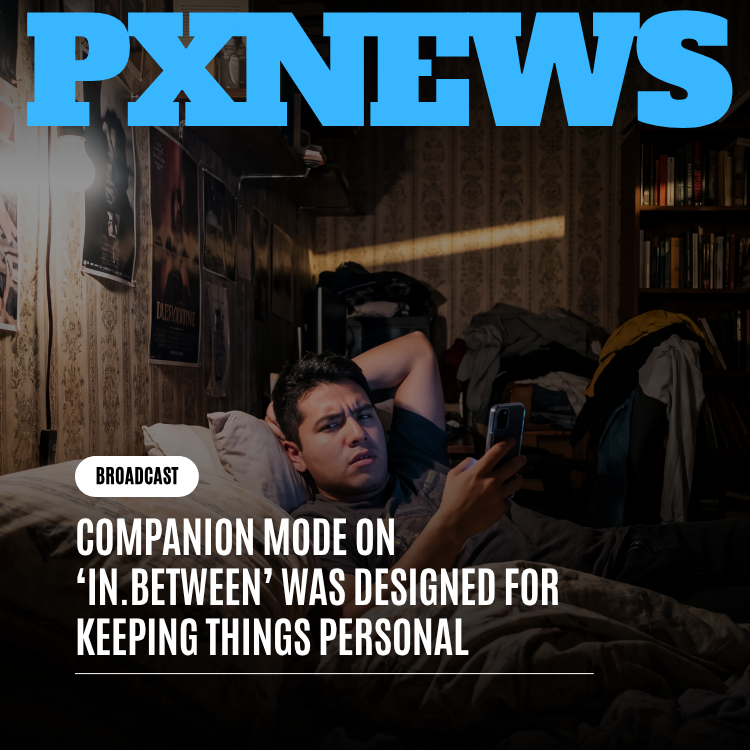
Most nights end the same way. The dream fades, the alarm goes off, and whatever was said or felt in the dark gets buried under the first email of the day. in.between was built to catch that material before it disappears. But somewhere in early testing, the team noticed something they had not designed for directly: people were not only bringing dreams to Nalani. They were bringing everything else too. The 2am thought that would not settle. The conversation replayed for the tenth time. The feeling with no clear source. Companion Mode is the part of in.between built specifically for that traffic, and it exists because the team decided, deliberately, that Nalani should not require a dream as a ticket to talk.
A Companion, Not a Feature Toggle
It would have been easy to build Nalani as a narrow tool: type in a dream, get a reflection back, done. That is a clean product loop, and it is not what in.between shipped. Nalani is a companion first, and dream interpretation is one of the things she is good at, not the boundary of what she does. Companion Mode makes that explicit inside the app. It is the same Nalani, the same memory, the same voice, but without the implicit expectation that a dream has to be on the table before the conversation starts.
This matters because a lot of what follows a person out of sleep is not a dream at all. It is the residue of the day before, a decision that will not resolve, a person who will not stop occupying the mind. Nalani does not ask for credentials to talk about any of it. She is curious first, unshockable, and she asks one question at a time, the same way she would about a dream, because from her side, a 2am thought and a 2am dream are made of the same material: something a person needs to say out loud before they can sleep.
We did not want anyone to feel like they needed a dream as an excuse to open the app. Some nights the thing keeping you up isn't a dream at all, and Nalani should still be there for that.
The in.between Team
Why Personal, Not Social
The bigger design decision sits underneath Companion Mode rather than inside it: in.between chose to build a private, one-to-one relationship between a person and Nalani, and to deliberately avoid the mechanics that define most apps built to hold attention at night. There are no feeds in in.between. No likes, no followers, no shared dream boards, no leaderboard of who journaled the most this week. That absence is not an oversight. It is the product.
Social engagement loops are built to be seen. They reward performance, comparison, and frequency, because those are the things that keep a feed alive. A dream journal built on that model would quietly change what people write. Entries would start to shape themselves around an imagined audience, and the material that is hardest to say out loud, the material that most needs somewhere private to land, would be the first thing edited out. in.between was built to avoid that trade entirely by never introducing an audience in the first place.
Companion Mode reflects that same choice at the level of a single conversation. Nothing said to Nalani is posted, surfaced to other users, or turned into content. Nalani's memory is scoped to the individual person she is talking to. She recalls that person's own recurring people, places, and feelings, built from that person's own nights and words, and never anything from anyone else's entries. A conversation at 2am stays a conversation at 2am, between one person and one companion, with nowhere else for it to go.
- Companion Mode works with or without a dream on the table.
- No feeds, likes, followers, or shared boards anywhere in the app.
- Nalani's memory is private to each person and never crosses between users.
- Conversations are not turned into content, streaks, or comparison metrics.
- The same Nalani carries over from Chat to Companion Mode to Brainstorm, so nothing has to be re-explained.
Talking Instead of Performing
There is a difference between writing something down and performing it, and most apps that ask people to reflect at night blur that line without meaning to. A streak counter turns a night of sleep into a scoreboard. A public entry turns a private feeling into a draft written for an audience. Nalani is built to sit on the other side of that line. She does not track streaks. She does not push notifications built around loss aversion. She asks a question, listens to the answer, and asks the next one, the way an actual conversation moves, rather than the way a growth loop moves.
That shows up most clearly in Companion Mode because Companion Mode is where the stakes are highest. A dream can feel strange to write down, but it usually feels safer than the raw, unfiltered thought that shows up when sleep will not come. Nalani meets that thought the same way she meets a dream: without judgment, without redirecting to a diagnosis, and without turning the moment into anything other than what it is. She is not a therapist, a doctor, or a crisis line, and she does not pretend to be one. If a conversation moves toward real danger, she stays present and points toward 988 or a local crisis line rather than continuing as if nothing changed. The rest of the time, she is simply there, present for whatever a person needs to say before they can rest.
Built for One Person at a Time
Companion Mode did not require new infrastructure so much as it required the team to hold a line: in.between would stay a private room, not a public stage, even as the product grew to include more of what happens in a person's inner life. Every decision that followed, no feed, no social graph, no cross-user memory, was downstream of that first commitment. It would have been simple to add lightweight social features later, the kind that quietly increase time in app. The team chose not to, because the value of in.between depends on people trusting that what they say to Nalani stays theirs.
That trust is also why privacy is treated as a baseline rather than a selling point. Data stays private to the person who wrote it, is encrypted in transit, is never sold, and can be deleted whenever someone wants it gone. Companion Mode lives inside that same guarantee. It is not a separate, riskier space bolted onto the journal. It is the same private room, open for a wider range of what a person might need to bring into it, at whatever hour they need to bring it.
Nalani was never meant to be a mirror held up for other people to see. She is built to be the one steady presence in a room with no audience, available for a dream, a spiraling thought, or nothing more specific than the need to talk something through before the night is over. Companion Mode is what that looks like in practice, and it is a fairly direct expression of what in.between has been building toward from the start: somewhere private, at any hour, with someone who is actually listening.
etapx
Designed in California. East Bay roots, global reach. A culture-first tech and experience studio at the intersection of art and engineering.